


The functions of compound microscopes mainly include the following aspects:
Textile inspection: In textile production, compound microscopes can be used to inspect the microstructure of fibers, fiber diameter and morphology, fiber fracture, etc., which plays an important role in the quality control of textiles.
Biomedical research: In the field of biomedicine, compound microscopes can be used to observe and study animal and plant cells, tissues, microorganisms, etc., such as studying the morphology, structure and properties of cancer cells.
Material analysis: In the field of materials science and engineering, compound microscopes are used to observe, measure and analyze the microstructure, crystal defects, phase changes and properties of various materials, such as studying the composition structure, particle shape, casting defects of crystals.
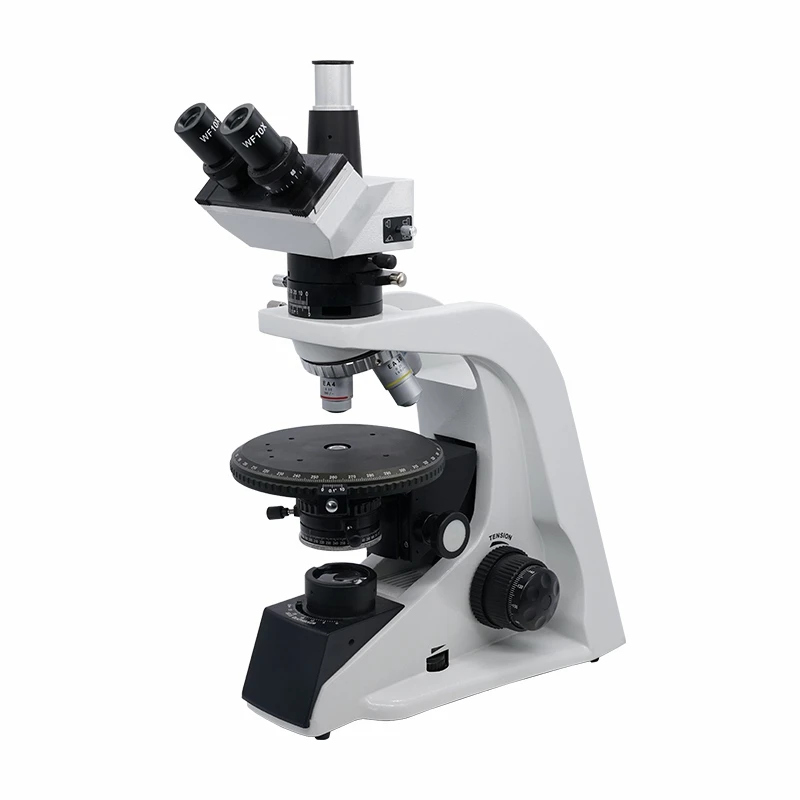
Geological research: In geological science research, compound microscopes are used to identify, analyze and measure various minerals, rocks and soils, such as observing the particles and crystal faces of various mineral crystals.
Environmental protection research: In the field of environmental pollution, compound microscopes are used to observe and study the microstructure, composition and pollution sources of pollutants, such as observing the composition and size of trace particles in the air.
Basic concept of compound microscope: A compound microscope is an optical instrument that has the functions of both an ordinary optical microscope and a chemical microscope. It has the characteristics of high resolution, high measurement accuracy and simple operation, and is widely used in various fields.


