


When it comes to introducing children to the fascinating world of science, a kids microscope set is an invaluable tool. It opens up a microscopic universe that is otherwise invisible to the naked eye, sparking curiosity and a love for learning. One crucial aspect that often comes into play when considering a kids microscope set is its size. In this blog post, we'll explore the various factors related to the size of a kids microscope set, and as a supplier of high - quality kids microscope sets, I'll share some insights to help you make an informed decision.
The Physical Dimensions of a Kids Microscope Set
The size of a kids microscope set can vary significantly depending on its type, features, and intended use. Generally, kids microscopes are designed to be more compact and lightweight compared to professional - grade microscopes. This is to make them easier for young hands to handle and more suitable for home or classroom use.
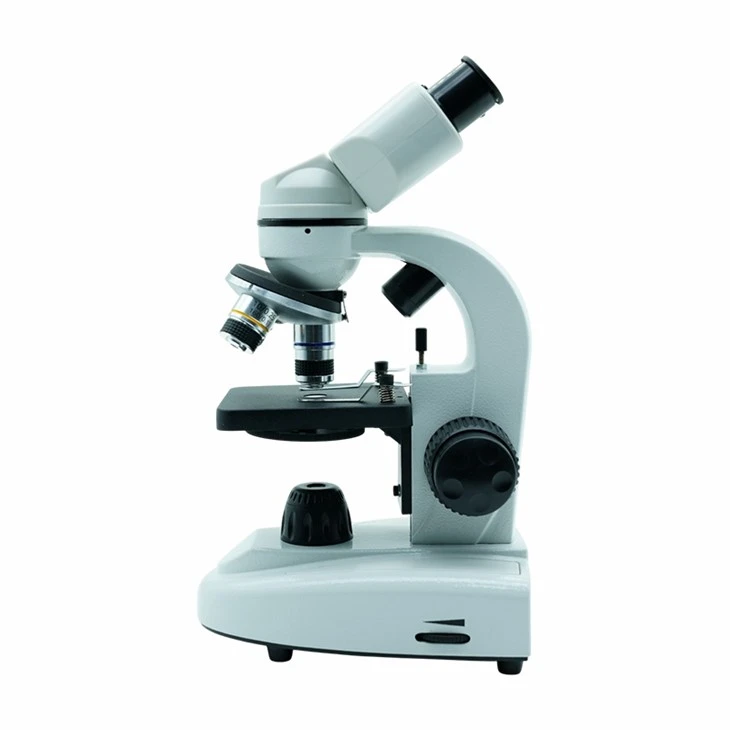
A basic Microscope for Kids may have a relatively small footprint, with a base that measures around 10 - 15 centimeters in length and width. The height of the microscope, from the base to the top of the eyepiece, could be in the range of 20 - 30 centimeters. These smaller sizes are ideal for younger children who may have less strength and dexterity. They can easily place the microscope on a small table or desk and maneuver it without much difficulty.
On the other hand, more advanced kids microscopes, such as the Compound Microscope 40X - 1000X, may be slightly larger. The additional components required to achieve higher magnification levels, like more complex lens systems and adjustable focus mechanisms, contribute to the increased size. The base of such a microscope might be around 15 - 20 centimeters in length and width, and the overall height could reach 30 - 40 centimeters.
Why Size Matters for Kids
The size of a kids microscope set is not just about portability; it also has a significant impact on the child's user experience.
Ease of Use
A microscope that is too large or heavy can be cumbersome for a child to operate. Younger kids may struggle to move the microscope around, adjust the focus, or place slides under the lens if the instrument is overly large. A well - sized microscope allows them to handle it independently, which boosts their confidence and encourages exploration. For example, the Xsp - 115RT Microscope for Kids 8 - 12 is designed with a size that is appropriate for children in this age group, enabling them to comfortably use it without adult assistance most of the time.
Storage
Space can be a concern, especially in homes or classrooms with limited room. A compact microscope set is easier to store when not in use. It can fit into a small cabinet or a bookshelf, ensuring that it doesn't take up too much valuable space. This is particularly important for schools or families with multiple educational tools.
Safety
A smaller and lighter microscope is generally safer for kids. There is less risk of it tipping over and causing injury or damage. If a microscope is too large and top - heavy, it may be more prone to falling, which could lead to broken parts or harm to the child.
Size and Functionality
While smaller microscopes are great for portability and ease of use, there is often a trade - off when it comes to functionality.
Magnification
Higher magnification levels usually require more complex optical systems, which often take up more space. A microscope that can achieve 1000X magnification, like our Compound Microscope 40X - 1000X, will typically be larger than one with a lower magnification range. However, this doesn't mean that smaller microscopes can't provide a great learning experience. Many basic kids microscopes with lower magnification (e.g., 40X - 400X) are still capable of showing interesting details of specimens such as plant cells, insects, and fibers.
Additional Features
Some kids microscope sets come with extra features like built - in cameras, LED lighting, or multiple lenses. These features can enhance the learning experience but also add to the size of the microscope. For instance, a microscope with a built - in camera will need space for the camera module and the associated electronics, making it larger than a standard microscope without this feature.

Choosing the Right Size for Your Child
When selecting a kids microscope set, it's essential to consider your child's age, interests, and the intended use of the microscope.
Age
For younger children (ages 4 - 7), a smaller and simpler microscope is usually the best choice. These microscopes are easy to handle and can still provide a fun introduction to the microscopic world. As children get older (ages 8 - 12), they may be ready for a more advanced microscope with higher magnification and additional features. The Xsp - 115RT Microscope for Kids 8 - 12 is specifically designed to meet the needs of this age group, offering a good balance between size and functionality.
Interests
If your child has a particular interest in a specific area of science, such as biology or geology, you may want to choose a microscope that can handle the types of specimens relevant to that field. For example, if they are interested in observing cells, a microscope with higher magnification may be necessary, even if it means a slightly larger size.
Intended Use
If the microscope will be used mainly at home, portability may not be as much of a concern. However, if your child will be taking the microscope to school or on field trips, a more compact and lightweight model is preferable.
Our Range of Kids Microscope Sets
As a supplier of kids microscope sets, we understand the importance of offering a variety of sizes and features to meet the diverse needs of our customers. Our Microscope for Kids collection includes models of different sizes, from small and basic microscopes for young children to more advanced compound microscopes for older kids.
The Compound Microscope 40X - 1000X is a popular choice for those who want a high - performance microscope that can show detailed images of microscopic specimens. It may be slightly larger than some of our other models, but the advanced features and high magnification make it worth the extra space.
For children aged 8 - 12, our Xsp - 115RT Microscope for Kids 8 - 12 is a great option. It has a size that is easy for kids in this age group to manage, and it comes with features that enhance the learning experience, such as adjustable lighting and multiple magnification levels.
Contact Us for Purchasing
If you're interested in purchasing a kids microscope set for your child, school, or educational institution, we'd love to hear from you. We can provide more detailed information about the size, features, and pricing of our products. Whether you need a small and simple microscope for a young child or a more advanced model for an older student, we have the right solution for you. Reach out to us to start a discussion about your requirements and explore the possibilities of bringing the microscopic world to life for the kids in your care.

References
- "Microscopy Basics for Kids", Educational Science Publications, 2020
- "The Impact of Microscope Design on Children's Learning", Journal of Science Education, 2019
- "Choosing the Right Microscope for Young Scientists", Science Education Review, 2018


