


When it comes to exploring the microscopic world, a binocular microscope is an invaluable tool. As a leading supplier of binocular microscopes, we understand the importance of resolution in these instruments. In this blog post, we will delve into what resolution means in the context of a binocular microscope, why it matters, and how it impacts your viewing experience.
Understanding Resolution in a Binocular Microscope
Resolution refers to the ability of a microscope to distinguish between two closely spaced objects as separate entities. In simpler terms, it is the measure of how clearly and sharply the microscope can render fine details of a specimen. A high-resolution microscope can reveal intricate structures and features that might otherwise be blurred or indistinguishable under a lower-resolution instrument.
The resolution of a binocular microscope is primarily determined by two factors: the numerical aperture (NA) of the objective lens and the wavelength of light used for illumination. The numerical aperture is a measure of the lens's ability to gather light and resolve fine details. It is influenced by the design and quality of the lens, as well as the refractive index of the medium between the lens and the specimen. A higher numerical aperture generally results in better resolution.
The wavelength of light also plays a crucial role in resolution. Shorter wavelengths of light can resolve smaller details than longer wavelengths. In most binocular microscopes, visible light is used for illumination, with a wavelength range of approximately 400 to 700 nanometers. However, some advanced microscopes may use ultraviolet or infrared light to achieve even higher resolution.
Why Resolution Matters
The resolution of a binocular microscope is essential for a variety of applications, including biological research, medical diagnosis, materials science, and quality control. In biological research, for example, high-resolution microscopes are used to study the structure and function of cells, tissues, and organisms. They can reveal details such as cell organelles, DNA molecules, and protein structures, which are crucial for understanding biological processes and developing new treatments for diseases.
In medical diagnosis, resolution is critical for detecting and identifying pathogens, such as bacteria and viruses, as well as for analyzing tissue samples for signs of cancer and other diseases. A high-resolution microscope can help doctors make more accurate diagnoses and develop more effective treatment plans.
In materials science, resolution is important for studying the microstructure and properties of materials, such as metals, polymers, and ceramics. It can help researchers understand how materials behave under different conditions and develop new materials with improved properties.
In quality control, resolution is used to inspect and measure the dimensions and surface features of products, such as electronic components, mechanical parts, and optical lenses. A high-resolution microscope can detect defects and imperfections that might otherwise go unnoticed, ensuring that products meet the required quality standards.
Factors Affecting Resolution
In addition to the numerical aperture and wavelength of light, several other factors can affect the resolution of a binocular microscope. These include:
- Objective lens quality: The quality of the objective lens is one of the most important factors affecting resolution. High-quality lenses are designed to minimize aberrations and provide sharp, clear images. They are typically made from high-grade glass or other optical materials and are precision-ground and polished to ensure accurate focusing and imaging.
- Illumination: The type and quality of illumination used can also affect resolution. Bright, even illumination is essential for achieving good contrast and resolution. Most binocular microscopes use either transmitted light or reflected light for illumination, depending on the type of specimen being observed. Transmitted light is used for observing transparent or translucent specimens, while reflected light is used for observing opaque specimens.
- Magnification: The magnification of the microscope can also affect resolution. While higher magnification can make small details appear larger, it does not necessarily improve resolution. In fact, increasing the magnification beyond the limit of the microscope's resolution can actually result in a loss of image quality and clarity.
- Specimen preparation: The way the specimen is prepared can also affect resolution. Proper specimen preparation is essential for ensuring that the specimen is thin, flat, and evenly stained or labeled. This can help to improve contrast and make it easier to observe fine details.
Our Binocular Microscopes and Their Resolution
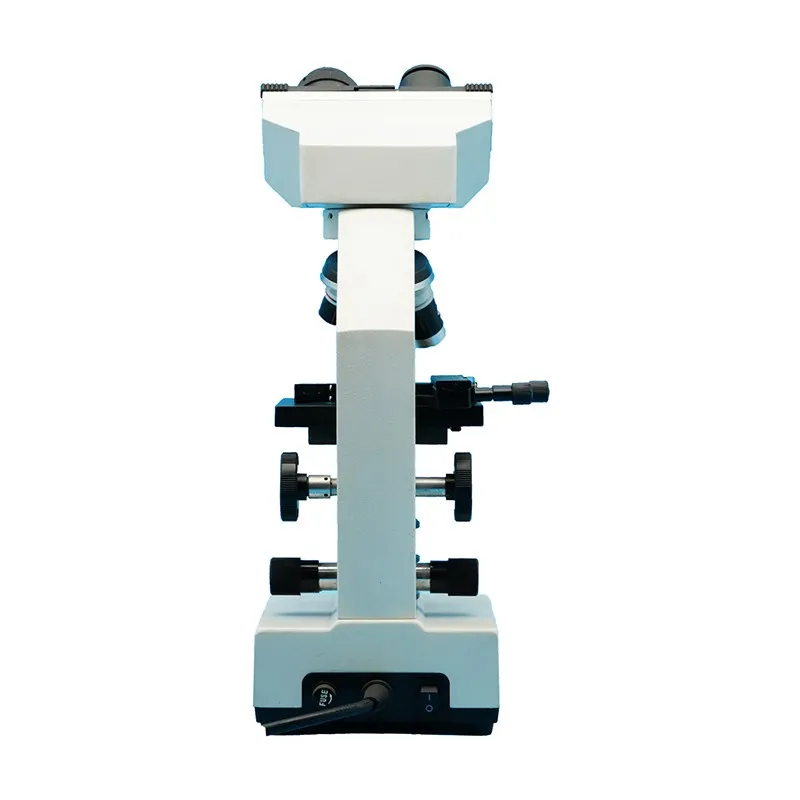
As a supplier of binocular microscopes, we offer a wide range of models with different levels of resolution to meet the needs of various applications. Our Xsz-107BN Microscope Binocular is a popular choice for educational and research purposes. It features a high-quality objective lens with a numerical aperture of 0.65, which provides excellent resolution and clarity. The microscope also has a magnification range of 40x to 1000x, allowing you to observe specimens at different levels of detail.
Our Croscope Binocular Microscope is another excellent option for biological research and medical diagnosis. It is equipped with a high-resolution objective lens and a powerful LED illumination system, which provides bright, even illumination and excellent contrast. The microscope also has a magnification range of 40x to 2500x, allowing you to observe specimens at high magnification.
For those who require even higher resolution, our 40x 2500x Led Binocular Compound Microscope is the ideal choice. It features a high-quality objective lens with a numerical aperture of 1.25, which provides exceptional resolution and clarity. The microscope also has a magnification range of 40x to 2500x, allowing you to observe specimens at very high magnification.
How to Choose the Right Resolution for Your Needs
When choosing a binocular microscope, it is important to consider your specific needs and applications. If you are using the microscope for educational purposes or general observation, a microscope with a lower resolution may be sufficient. However, if you are using the microscope for research or medical diagnosis, you will need a microscope with a higher resolution.
Here are some factors to consider when choosing the right resolution for your needs:
- Type of specimen: The type of specimen you will be observing will determine the level of resolution you need. For example, if you are observing small cells or microorganisms, you will need a microscope with a higher resolution than if you are observing larger specimens, such as tissues or organs.
- Magnification requirements: The magnification requirements of your application will also affect the resolution you need. If you need to observe specimens at high magnification, you will need a microscope with a higher resolution to ensure that the details are clear and sharp.
- Budget: The resolution of a microscope is often directly related to its price. Higher-resolution microscopes are generally more expensive than lower-resolution microscopes. Therefore, it is important to consider your budget when choosing a microscope.
Conclusion
In conclusion, resolution is a critical factor in the performance of a binocular microscope. It determines the ability of the microscope to distinguish between two closely spaced objects as separate entities and to reveal fine details of a specimen. A high-resolution microscope can provide clear, sharp images that are essential for a variety of applications, including biological research, medical diagnosis, materials science, and quality control.
As a supplier of binocular microscopes, we offer a wide range of models with different levels of resolution to meet the needs of various applications. Our microscopes are designed to provide excellent performance and reliability, and we are committed to providing our customers with the best possible service and support.
If you are interested in learning more about our binocular microscopes or have any questions about resolution or other aspects of microscope performance, please contact us. We would be happy to help you choose the right microscope for your needs and provide you with more information about our products and services.

References
- Murphy, D. B. (2001). Fundamentals of light microscopy and electronic imaging. Wiley-Liss.
- Inoué, S., & Spring, K. R. (1997). Video microscopy: The fundamentals. Plenum Press.
- Pawley, J. B. (Ed.). (2006). Handbook of biological confocal microscopy. Springer Science & Business Media.


