


When it comes to nurturing a child's curiosity about the microscopic world, a high - quality kids microscope can be an invaluable tool. As a supplier of Best Kids Microscope, I have had the privilege of witnessing the excitement and educational benefits that these instruments bring to young minds. In this blog, I will delve into what makes the best kids microscope and provide insights to help you make an informed choice for your child.
Key Features of the Best Kids Microscope
Magnification Power
One of the most important aspects of a kids microscope is its magnification power. A good kids microscope should offer a range of magnification levels to allow children to explore different specimens at various scales. Most beginner - friendly microscopes for kids start with a low magnification of around 40x, which is sufficient to view larger specimens such as plant cells or the legs of an insect. Higher magnification levels, up to 400x or even 1000x in some advanced models, enable children to observe smaller details like bacteria and blood cells.
For example, a microscope with a 40x - 400x magnification range provides a great balance. At 40x, kids can easily find and focus on specimens, while the 400x magnification allows for a more in - depth exploration of the microscopic world. This range is suitable for a wide variety of specimens commonly found in a child's environment, from pond water samples to leaf sections.
Ease of Use
Children are still developing their fine motor skills and scientific understanding, so a microscope should be easy to operate. The focusing mechanism is a critical part. A smooth and precise focusing knob allows kids to quickly and easily bring the specimen into sharp focus. Some microscopes feature a dual - focusing system, with a coarse focus for quick adjustments and a fine focus for more precise tuning.
In addition, the stage of the microscope should be easy to manipulate. A movable stage with simple controls enables children to position the specimen correctly under the objective lens. Also, the light source should be easy to turn on and off, and ideally, it should provide sufficient and even illumination across the specimen.
Durability
Kids are often energetic and may not handle equipment as delicately as adults. Therefore, a kids microscope needs to be durable. It should be made of high - quality materials that can withstand accidental bumps and drops. The body of the microscope is usually made of sturdy plastic or metal. Metal components, such as the frame and focusing knobs, are more resistant to wear and tear, while plastic parts can be lightweight and less likely to cause injury if dropped.
The lenses of the microscope are also crucial. They should be made of high - quality glass that is scratch - resistant. Some microscopes come with lens covers to protect the lenses when not in use, which helps to extend their lifespan.
Accessories
A comprehensive Kids Microscope Set can enhance the learning experience. Many kids microscopes come with a variety of accessories, such as prepared slides, blank slides, coverslips, and tweezers. Prepared slides are pre - mounted with different specimens, which are great for kids to start their exploration right away. Blank slides and coverslips allow children to create their own slides, which encourages creativity and hands - on learning.
Tweezers are useful for handling specimens, such as picking up small insects or placing thin sections of plants on the slides. Some sets also include a dropper for collecting liquid specimens, like pond water. Additionally, a storage case is a valuable accessory as it helps to keep all the components organized and protected when not in use.
Types of Kids Microscopes
Compound Microscopes
Compound microscopes are the most common type of microscope for kids. They use two sets of lenses - the objective lens and the eyepiece lens - to magnify the specimen. These microscopes are suitable for viewing thin, transparent specimens, such as cells and microorganisms. A Microscope for Kids in this category usually has a light source located beneath the stage to illuminate the specimen from below.
Compound microscopes offer relatively high magnification levels, making them ideal for scientific exploration. They are also versatile, as they can be used to study a wide range of specimens, from biological samples to small mineral samples.
Stereo Microscopes
Stereo microscopes, also known as dissecting microscopes, provide a three - dimensional view of the specimen. They are typically used for viewing larger, opaque specimens, such as insects, rocks, and flowers. Stereo microscopes have a lower magnification range, usually from 10x to 50x, but they offer a wider field of view and greater depth of field.
These microscopes are great for hands - on activities, such as dissecting small organisms or examining the surface features of objects. They are also less intimidating for younger children, as they provide a more natural - looking view of the specimen.
Choosing the Right Microscope for Your Child
Age and Skill Level
The age of your child is an important factor to consider. Younger children, around 5 - 8 years old, may benefit from a simpler microscope with lower magnification and more user - friendly features. A stereo microscope can be a good choice for this age group, as it allows them to explore larger objects and develop basic observation skills.
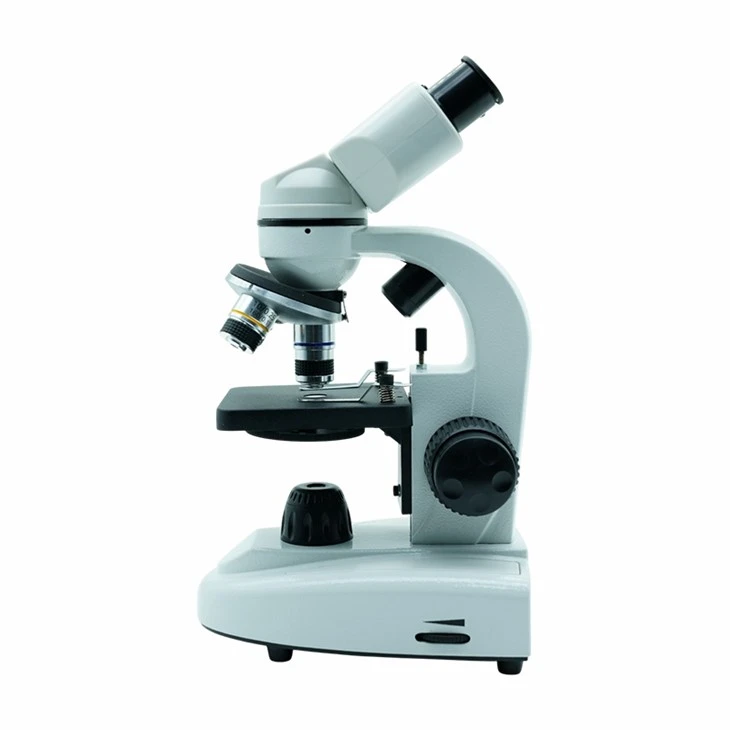

Older children, from 9 - 12 years old, can handle more advanced microscopes with higher magnification levels. A compound microscope with a wider magnification range and more precise controls will challenge them and enable them to conduct more in - depth scientific investigations.
Interests
Consider your child's interests when choosing a microscope. If your child is interested in biology, a compound microscope with a set of biological specimens will be a great fit. If they are more interested in geology or entomology, a stereo microscope may be more suitable, as it can be used to examine rocks, insects, and other natural objects.
Why Choose Our Best Kids Microscope
As a supplier of Best Kids Microscope, we take pride in offering high - quality products that meet the needs of children and parents. Our microscopes are designed with the features mentioned above in mind. We offer a wide range of magnification levels, from beginner - friendly to more advanced models, to suit different age groups and skill levels.
Our microscopes are easy to use, with smooth focusing mechanisms and simple controls. They are also made of durable materials to withstand the rigors of children's use. In addition, our Kids Microscope Set comes with a variety of accessories to enhance the learning experience.
We are committed to providing excellent customer service. If you have any questions or need assistance in choosing the right microscope for your child, our team of experts is always ready to help.
Contact Us for Procurement
If you are interested in purchasing our kids microscopes for educational institutions, toy stores, or personal use, we welcome you to contact us for procurement. Our products are of high quality and competitively priced. We can provide you with detailed product information, pricing, and shipping details. Start your journey into the microscopic world with our best kids microscopes today!
References
- National Science Teachers Association. (2018). "Microscopes in the Classroom: A Guide for Teachers."
- Microscopy Society of America. (2020). "Introduction to Microscopy for Beginners."
- Children's Science Museum Research. (2021). "The Impact of Microscopes on Children's Scientific Inquiry."


